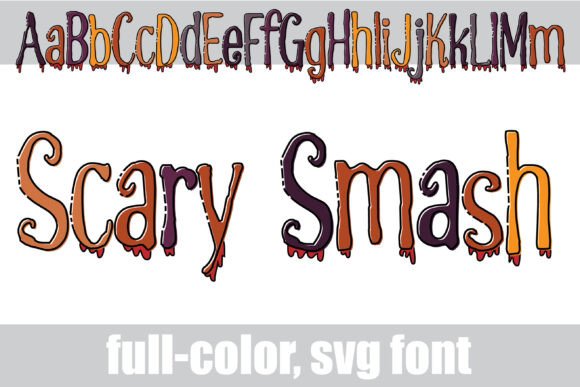
Unleash Spooky Creativity with the Scary Smash Font
In the competitive world of graphic design, capturing attention often hinges on bold, thematic typography that instantly sets a mood. When seasonal campaigns or edgy branding projects demand a visceral impact, standard sans-serifs often fall short. This is where specialized display fonts, particularly those with distinct visual textures and color capabilities, become invaluable assets in a designer's toolkit.
Understanding the Visual Power of Scary Smash
The Scary Smash font is a prime example of a typeface engineered for maximum visual impact in specific contexts. This full-color font features an outlined design rendered in a classic Halloween color palette, complete with a realistic drippy blood effect. As an OpenType full-color (SVG) font, it preserves these complex color gradients and textures directly within the font file itself. This technology allows for a level of detail and personality previously reserved for static image files, offering designers a dynamic asset that remains fully editable text.
For creative professionals, the utility of such an asset lies in its ability to bridge the gap between illustration and typography. It is particularly effective for titles, display headers, event posters, and merchandise where a spooky, high-energy aesthetic is required. An alternative version is also accessible via the system’s character map, providing additional color variations for the letters and expanding the creative possibilities for layering and color matching within a broader design system.
Technical Integration and Workflow
Integrating specialized assets like Scary Smash into a professional design workflow requires an understanding of file compatibility. Like any standard .otf file, this font is installed through native management systems—FontBook on Mac or the Control Panel on Windows. However, designers must be mindful of software limitations regarding SVG (Scalable Vector Graphics) fonts.
It is a critical workflow consideration that full-color fonts will render as solid black in non-compatible programs. Furthermore, even in compatible software such as Adobe Creative Cloud products, Silhouette Studio, Quark, or Inkscape, the preview window may display the font in black. The true color vector data only renders once the text is typed onto the active document canvas. Understanding this technical nuance ensures a smooth design process and prevents confusion during the asset selection phase.
Practical Applications in Modern Branding and Marketing
While often associated with Halloween, the application of a distinct, textured font extends across various sectors of visual communication. Thoughtful typography is a cornerstone of brand identity, and using a specialized font like Scary Smash can significantly enhance user engagement in specific campaigns.
Consider the following applications where this style of typography elevates the final product:
- Event Branding: Creating cohesive visual identities for haunted houses, fall festivals, or themed parties using consistent typography across tickets, signage, and digital invites.
- Digital Marketing: Developing scroll-stopping social media graphics and email headers that require an immediate emotional reaction from the viewer.
- Packaging Design: Adding a tactile, thematic element to limited-edition product packaging, such as confectionery or craft beverages, to signal seasonal relevance.
- Editorial and Web Design: Using the font for hero images or pull quotes in editorial layouts to establish a strong visual hierarchy and thematic tone.
Best Practices for Typographic Hierarchy and Scalability
When incorporating display fonts with heavy textures and distinct color palettes, adherence to design principles is essential to maintain professionalism. The primary goal is to enhance readability and visual hierarchy, not detract from the message.
First, consider the visual weight of the font. Because Scary Smash carries significant visual texture, it is best reserved for headlines or display text rather than body copy. Pairing it with a clean, neutral sans-serif or serif font for supporting text creates a balanced composition that guides the reader’s eye naturally.
Second, evaluate the color palette of your overall design. Since the font includes built-in colors, the surrounding design elements should complement rather than clash with these hues. Using neutral backgrounds often allows the intricate details of the SVG font to stand out. Finally, always test scalability. While vector-based fonts are scalable, the intricate details of a "drippy" texture may lose legibility at very small sizes, reinforcing the importance of using this asset for macro-level design elements.
Ultimately, the evolution of full-color SVG typography represents a significant leap forward for digital design assets. By leveraging tools like Scary Smash, designers can inject personality and thematic depth into their work with unprecedented ease. Selecting the right typography is not merely about aesthetics; it is about choosing a visual voice that resonates with the audience and reinforces the core message of the project.